
About Guessmint
Guessmint is a daily coin game. Every day, one real coin from a public collection; six guesses to say which state, country, empire or tribe issued it and when. It is free, has no accounts, and runs in the browser.
Where the coins come from
Over the past decades museums and libraries have published photographs of their collections under open licenses — public domain, CC0, Creative Commons. Guessmint is built on that work. The launch set draws most heavily on the Rijksmuseum, the Cleveland Museum of Art, the Metropolitan Museum of Art and the Smithsonian's National Numismatic Collection, with further coins photographed by individual contributors on Wikimedia Commons. Thousands of catalogue records were gathered from these collections, matched to the state, country, empire or tribe that issued each coin and the period it was struck, and reviewed one by one before any coin could appear in the game. The result is more than two hundred issuers across some 2,500 years, from Greek city-states and the Roman Empire to the sultanates, kingdoms and republics that followed. Every photograph is credited, and the Credits page lists every institution and photographer with their license.
The photographs are never edited. What looks like a covered patch on a coin is an overlay on the screen; the image underneath is exactly what the collection published.
How the game is designed
The game asks two questions a coin can actually answer — where and when — and tells you after each guess how far off you are and in which direction. It never tells you the exact number of years, because that would turn the puzzle into arithmetic. The issuer you guess is always the state, country, empire or tribe that struck the coin, as it was then, not the modern country that occupies the place today. The map behind the board shows the world in the year you have chosen, so the atlas does the remembering and you do the reasoning.
Most days are coins a curious person can place from what is on them. About once a week there is a Challenge coin that collectors love and newcomers may never have met, with tips to go with it.
What Guessmint is not
It is not a quiz with a leaderboard, and it is not a collecting app. There is nothing to buy, nothing to log into, and nothing that follows you around the web. Your streak is yours, in your browser.
For collections and educators
If you run an open-access collection and recognize your photographs here, that is your license at work — thank you. If you teach, Guessmint is a five-minute daily exercise in reading objects, dates and maps, and every coin links back to its source once the day's round is over.
Yesterday's coin
Guessmint #7 · October 16, 2026 · Classic
Gold nomisma of the Byzantine Empire under Basil II Bulgarotonos, 975–1025.
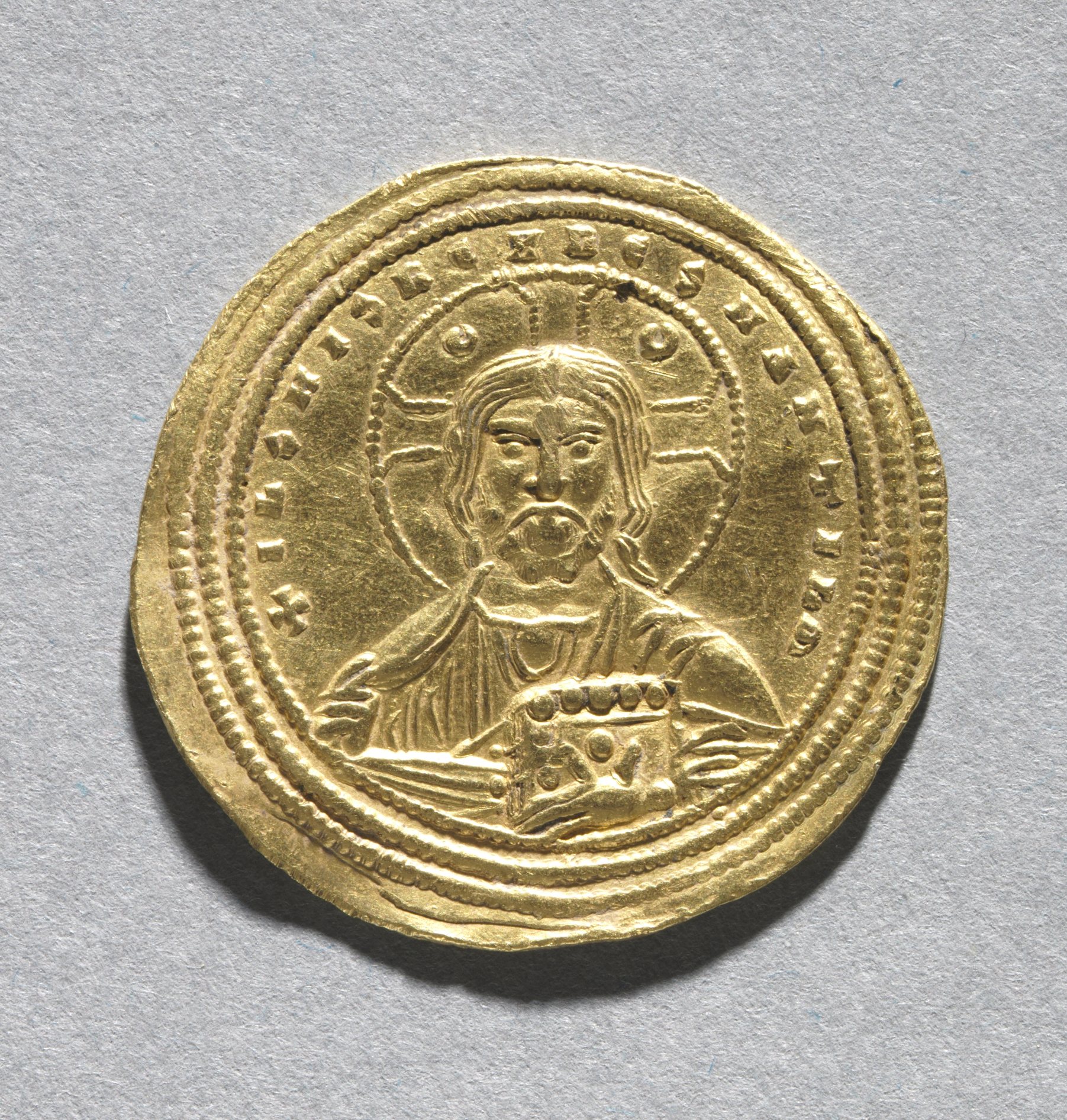
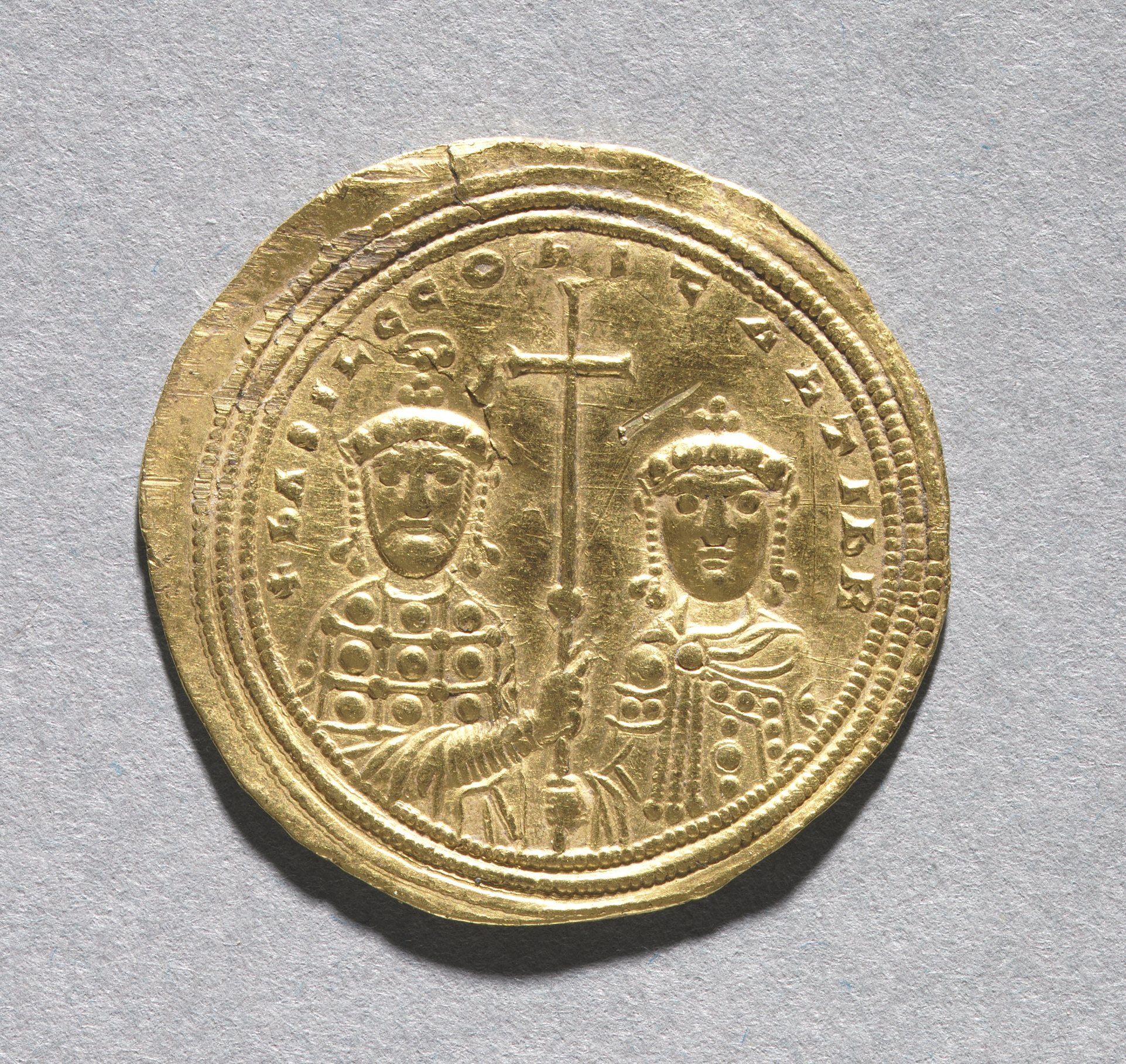
The two crowned brothers on this Byzantine gold coin are Basil II, remembered as the 'Bulgar-slayer', and Constantine VIII, who left the ruling to him.
- This is the full-weight gold coin, the histamenon, of about 4.4 grams. In the 960s Nikephoros II added a lighter coin, the tetarteron, two carats short, and the historian Zonaras says taxes were collected in the heavy coin while the state paid its own bills in the light one. Under Basil II the heavy coin grew broader and thinner, as this one is.
- The two crowned figures holding the cross are brothers, Basil II, bearded, and Constantine VIII. Both were crowned as small boys before their father died in 963. Constantine shared the imperial title for more than sixty years but left the governing to Basil, and ruled alone for only three years after his brother's death in 1025.
- Basil II ruled for 49 years and 11 months, longer than any other Roman emperor, and spent much of it conquering Bulgaria; after the battle of Kleidion in 1014 he is said to have blinded 15,000 prisoners. He died with 14.4 million gold coins in the treasury. The name 'Bulgar-slayer' came into common use only in the late twelfth century.
- Issuer
- Byzantine Empire
- Struck
- AD 975 – 1025
- Denomination
- nomisma
- Metal
- gold
- Ruler
- Basil II Bulgarotonos
- Tier
- Classic
Photograph: Cleveland Museum of Art · CC0 · View at the source
Details are drawn from the holding institution's catalogue record and reviewed before publication. Spotted a mistake? See how to report it.